
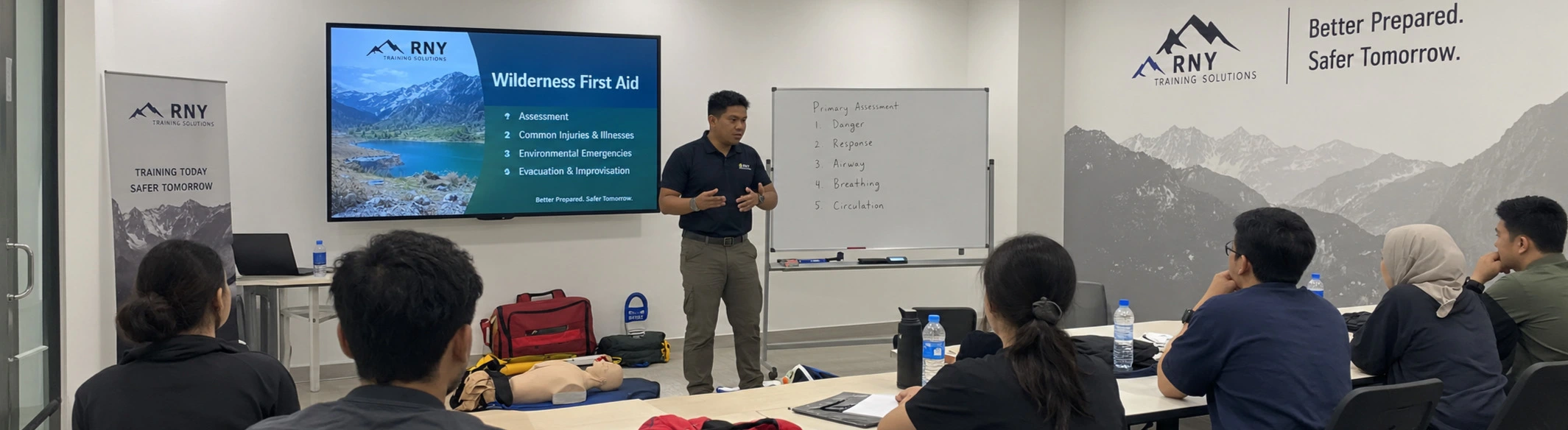
Wilderness First Aid Training Program
Essential First Aid Skills for Remote and Outdoor Environments
The Wilderness First Aid Training Program is designed to equip participants with essential knowledge and practical skills for providing first aid in remote and outdoor environments where immediate access to medical facilities or emergency services may be limited.
The training focuses on casualty assessment, field trauma management, environmental emergencies, heat and cold-related injuries, improvised splinting, prolonged casualty care, and casualty evacuation.
Duration
2–4 Days
Target Participants
- Government Search and Rescue Teams
- Forestry Officers
- National Park Rangers
- Disaster Response Teams
- Outdoor Activity Guides
Training Content
- Casualty Assessment in Remote Areas
- Field Trauma Management
- Environmental Emergencies
- Heat and Cold-Related Injuries
- Improvised Splinting Techniques
- Prolonged Casualty Care
- Casualty Evacuation
Training Method
The training is conducted in person and combines theoretical instruction, practical exercises, scenario-based learning, and field simulations relevant to remote and outdoor environments.
WHY CHOOSE RNY?
Practical Training. Professional Approach. Field-Ready Skills.
RNY Training Solutions delivers professional training programs that combine knowledge, practical skills, and operational readiness to prepare participants to respond effectively to emergency and critical situations.
✔ Experienced Instructors
Training is delivered by experienced instructors using practical, structured, and participant-focused approaches.
✔ Practical & Scenario-Based Training
Participants gain more than theoretical knowledge through demonstrations, hands-on practice, role play, and realistic scenario-based simulations.
✔ Structured Training Levels
The program is available across multiple training levels, allowing participants to select a program based on their background, capabilities, and training requirements.
✔ Field-Applicable Skills
Training focuses on practical skills that can be applied in emergency situations and challenging field environments.
✔ Professional Training Environment
RNY provides a structured and professional training environment designed to support effective learning and skill development.
WHY WILDERNESS FIRST AID TRAINING?
✔ Build Confidence in Remote Emergencies
Develop the knowledge and skills required to respond to emergencies in locations where immediate medical assistance may not be available.
✔ Develop Field-Based First Aid Skills
Learn practical techniques for managing trauma and medical emergencies in remote environments.
✔ Prepare for Environmental Emergencies
Understand how to respond to heat, cold, and other environmental conditions that may affect casualties.
✔ Strengthen Evacuation Skills
Develop practical knowledge for managing and preparing casualties for evacuation from remote locations.
✔ Scenario-Based Learning
Apply knowledge through practical exercises and field-based scenarios designed to reflect real-world outdoor and remote environments.
FREQUENTLY ASKED QUESTIONS (FAQ)
- What is Wilderness First Aid Training?
Wilderness First Aid Training is a practical program designed to equip participants with first aid skills for managing injuries and medical emergencies in remote and outdoor environments where access to professional medical care may be limited.
- Who can participate in the Wilderness First Aid Training?
The program is designed for government search and rescue teams, forestry officers, national park rangers, disaster response teams, and outdoor activity guides.
- How long is the training?
The training duration ranges from 2–4 days, depending on the training requirements and program scope.
- What topics are covered in the training?
The training covers casualty assessment in remote areas, field trauma management, environmental emergencies, heat and cold-related injuries, improvised splinting, prolonged casualty care, and casualty evacuation.
- Does the training include practical field exercises?
Yes. The training combines theoretical learning with hands-on practice, scenario-based exercises, and field simulations to help participants apply their skills in realistic remote and outdoor environments.